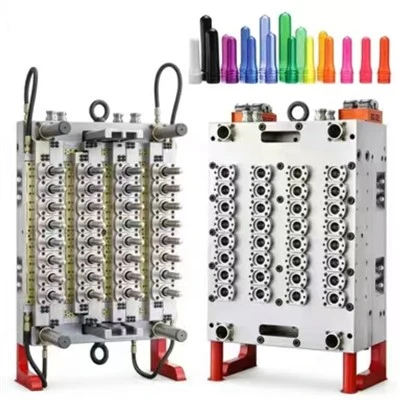
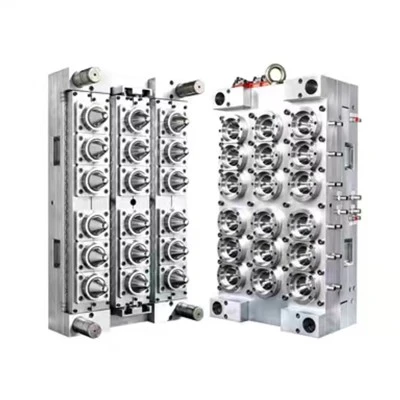
Mechanical Positioning: A Stable and Reliable Foundation
Mechanical positioning acts like a precise navigation system for the mold, securing the PET material through physical structures:
Guide Pillars and Bushings: Cylindrical mating structures ensure concentricity of the upper and lower molds, achieving a positioning accuracy of ±0.05mm.
Corner Positioning Blocks: L-shaped baffles at the four corners of the material, suitable for rapid positioning of rectangular PET sheets.
Pin Hole Fitting: Pre-punched positioning holes mate with mold pins, particularly suitable for PET workpieces with pre-machined holes.
Vacuum Adsorption: An Elegant Solution for Thin Sheets
When processing ultra-thin PET sheets (below 0.5mm), vacuum adsorption exhibits unique advantages:
Porous Adsorption Plate: Divided mold surface... 0.3-0.8mm micropores, recommended negative pressure range -0.6~-0.8MPa
Zoned control: Divides the adsorption surface into independent control zones to accommodate materials of different sizes.
Edge sealing strip: Silicone sealing rings prevent air leakage and ensure uniform distribution of adsorption force.
Hot melt positioning: Innovative option for high-temperature environments.
For PET processing scenarios requiring heat molding:
Local softening method: Localized softening of PET using mold heating pins to form positioning indentations.
Hot melt bumps: Pre-set bumps on the mold surface, which fuse and fix with the PET after heating.
Temperature control: Recommended temperature range of 180-220℃ to avoid excessive crystallization of the material affecting transparency.